

Views • 21 October 2026
How asset managers should navigate the road to EPC B

The countdown to EPC B has (re)started. Asset managers now have a choice: treat the 2031 deadline as a compliance exercise or use it to improve the long-term performance and value of their assets.
Our view is that simply doing the minimum could prove a false economy.
According to the government register, there are more than 800,000 commercial EPCs across England and Wales, with 72.7% carrying a rating below B. The proposed requirements initially focus on larger buildings, exceeding 1,000 m². Whilst these are estimated to represent less than 10% of non-domestic buildings, this still means around 85,000-100,000 buildings require improvement over the next four years. The equivalent of 407 to 480 buildings a week.
This highlights the substantial scale of work the industry must deliver within a relatively compressed timeframe. Consultants, contractors and equipment suppliers are already filling order books. Waiting until the deadline is close is likely to mean less choice, higher delivery costs and greater risk.
Looking ahead, the first priority should be to understand your portfolio fully.
Building owners and managers need a building-by-building view of current EPC performance, certificate expiry dates, building fabric, plant condition, planned maintenance and likely improvement requirements. They should also verify that existing EPC records accurately reflect the buildings and that the underlying assumptions remain valid. This technical baseline is essential, and from there, the strategic decision-making begins.
Broadly, building owners can take one of two approaches. The first is to focus on doing what is necessary to achieve compliance, targeting investment where it is most needed and avoiding unnecessary capital expenditure. The second is to use the requirement as an opportunity to take a broader view, aligning compliance works with wider asset, energy and sustainability objectives.
Company A and Company B illustrate these two approaches.
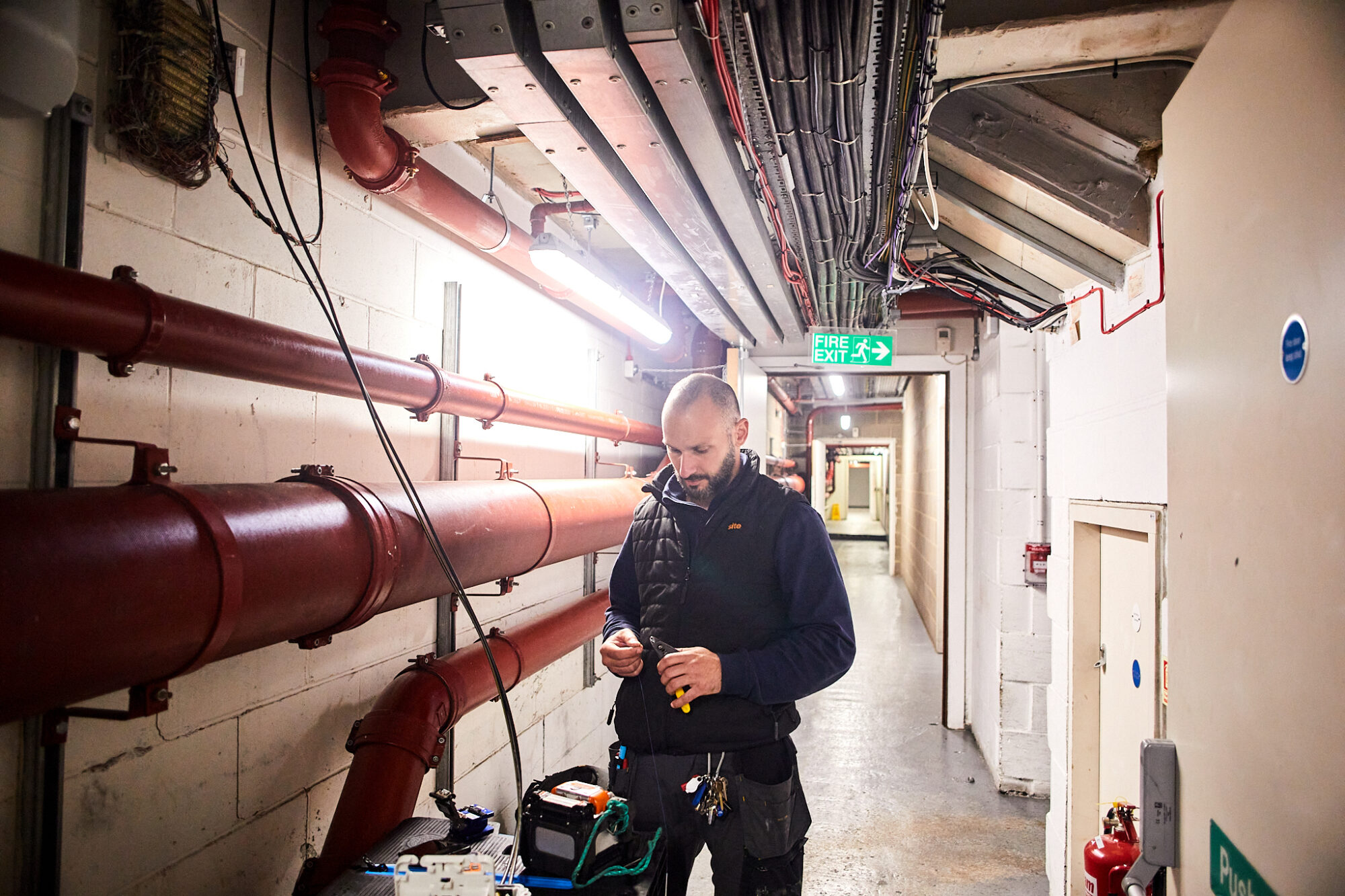
Company A: Do what is necessary
Company A’s strategy is straightforward: identify the assets at greatest risk of failing MEES requirements, establish the minimum interventions required to reach EPC B, and phase investment according to compliance risk and certificate expiry dates.
That may be entirely sensible.
Assets should first be grouped by current EPC rating, expiry date and whether there is gas on site. Gas-heated buildings will face a different trajectory from electrically heated buildings, as they are increasingly less likely to achieve an EPC of B. This helps building owners and managers identify which buildings are at higher risk and which require early intervention.
For higher-risk assets, a site audit is recommended. A MEES compliance roadmap should set out the proposed measures, expected EPC impact, indicative costs, dependencies and delivery timescales. Larger or more complex buildings may require at least 24 months before certificate expiry to confirm the project brief, obtain approvals, secure funding, procure contractors and complete the works.
The process doesn’t end when construction is complete. A post-works assessment by a licensed energy assessor is required to confirm that the improvements have delivered the expected outcome, and so the new EPC can be calculated and lodged on the government’s platform. Pre-works site visits also reduce the risk of relying on theoretical assumptions rather than the building’s actual characteristics.
This approach controls capital expenditure and avoids over-investing in assets where the return is unlikely to justify it.
But there is a trade-off. Optimising purely for the EPC certificate can mean missing opportunities to reduce actual energy consumption, lower operating costs and improve the occupier proposition.

Company B: Make the investment work harder
Company B takes a different view. Instead of asking, “What is the most economical route to EPC B?”, it asks, “If we are investing in the building anyway, what else can that investment achieve?”
That means looking beyond the EPC rating itself. Company B considers physical climate risks, insurance implications, net zero commitments, planned preventative maintenance and alignment with voluntary standards such as SBTi, CRREM and GRESB. Wider regulatory requirements, including ESOS, SECR and the UK Sustainability Reporting Standards, can also be brought into scope.
A ten-year planned preventative maintenance assessment can be particularly valuable. If a roof, heating system or air-conditioning plant is already approaching the end of its useful life, replacement can be coordinated with energy efficiency improvements rather than treated as a separate project.
Likewise, if a gas boiler is nearing end of life, installing another like-for-like system may appear to save money in the short term, but if it then needs replacing to meet MEES requirements after a couple of years, the client may find themselves decommissioning a perfectly good system and paying more in the long term. A heat pump or other lower-carbon solution may require more detailed feasibility work and have a higher capital cost, but could help retain occupiers that need to demonstrate compliance with their own net zero targets, as well as ensure compliance with MEES. The right solution will depend on the building, but these questions need to be considered before the replacement decision is made.
The upfront cost may be higher, but so can the return. Lower energy use, reduced operating costs, better resilience, stronger sustainability credentials, potentially higher asset value and greater future-proofing can all strengthen the business case.
The key is to move beyond high-level portfolio targets and understand what is achievable at individual building level. Building-level audits, energy models and costed option appraisals provide a more reliable basis for forecasting EPC improvement, carbon savings and return on investment. This is also where the expertise of specialists, such as the Climate Ready team at MAPP, becomes particularly valuable.
Compliance is the floor, not the strategy
Neither Company A nor Company B is automatically right. Different portfolios, assets and client strategies require different levels of investment.
The mistake is applying the same strategy to every portfolio or leaving decisions until the deadline forces action.
For some portfolios, compliance with MEES will be challenging enough. For others, a greater investment is warranted because the works can support asset value, occupier demand, carbon reduction and long-term resilience at the same time.
Every roadmap should be practical. It should identify the required measures, budget costs, programme, responsibilities and risks. The legislation is creating a deadline that every landlord must meet. Organisations that act early have more time to secure the right specialist support, validate their data, coordinate works with planned maintenance and procure intelligently.
By 2031, reaching EPC B will simply be the cost of entry. The competitive advantage lies in what asset managers choose to achieve along the way.